Enviro-Blah!

Environmental Observations

LightBlog
Responsive Ads Here
Showing posts with label Food Miles. Show all posts

Tuesday, March 20, 2007

Sometimes the sustainable living ideology gets taken too far - the idea of eating roadkill isn't likely to persuade many people to live in a more sustainable way. I think that the push for locally produced food is a good idea, not only in terms of the environment but in terms of taste. I remember the first time I tasted a watermelon immediately after picking it in Australia. I couldn't beleive that the delicious thing I was eating was the same as the tasteless pap that passes for watermelon in supermarkets in the UK. Still, sometimes things just aren't available locally; I like coconuts and they just aren't going to grow well here in East Yorkshire and I guess that the coconut is just about the only export product from many small tropical countries.

Locally produced food, though, has the advantage of reducing carbon emissions through a decrease in transport and often in terms of the amount of energy used in processing and packaging, as locally bought foods often come straight from the farm to the market.

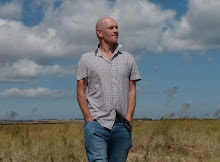
One particular farmers' market in Canterbury, Kent, provides not just locally produced food, but locally hit roadkill! Fergus Drennon has been a forager and scavenger of food since the age of 6 or 7 apparently, and only eats meat when he finds it dead on the road, regularly selling foraged food at the market in Canterbury. In a way I quite like this idea - I don't like seeing things wasted and I'm sure that many freshly killed animals are quite tasty. However, maybe it's the sort of thing best kept to oneself? Whilst people like Fergus may pride themselves at the sustainability of their lives, this type of environmental fanaticism may well discourage many people from making sustainability part of their lives.

Fergus, though, does share my distaste for supermarkets (maybe he worked in one too), saying that it is unlikely that supermarkets will stock the unexpected treat of unlaid eggs within a roadkilled bird!!!! Still, he says that he is very happy with his lifestyle, and that is what matters, and I would assume is something that many supermarket shoppers could not honestly say. At least this is what it seems to me by the miserable expressions on the faces of most of the customers where I work.

Thursday, February 15, 2007

Previously I wrote about the supermarket effect on food miles, and how users of supermarkets might reduce their food miles and consequently reduce their carbon footprint. Fortunately, for those of us that break out in a rash at the very mention of a supermarket there are options. One of my favourites, although not neccessarily the best, is to go for wild food.

Wild food that can be obtained within walking distance of the house is an excellent way of reducing food miles to zero. If you don't live in the countryside then a short drive to a wild food area is no worse than driving to the supermarket and the food you obtain will not have been driven around, flown about or carried by ship. Not only are the food miles of wild food zero, or close to zero, they are not packaged - fantastic news for "green nerds" like me.

For those that turn up their noses at the idea of wild food let me tempt you with blackberries, chestnut stuffing, puffball fried in wild garlic, damson jam and even grilled fish with wood sorrel and mint salad.

The fact is that we use a tiny percentage of the planet's species as food when most of them are edible in some form or after some preparation.

Most people think of acorns as being poisonous, but with a little treatment they can be made into a tasty snack or even become part of the staple diet. Take a look at how to use acorns for a snack or to make acorn flour.

It may seem tricky to use wild food in order to reduce our detrimental effect upon the environment, but by using some imaginative recipes it is possible to make wild food a significant part of the diet and make a reduction in our food miles tally.

Recipes for Dandelions for salad, jelly and "coffee" could be useful.
For those that like salad the options are plentiful.
Cooking with weeds gives an idea of the number of options there are for using plants that we normally regard as a pest.

For those with a fishing rod virtually any fish can be eaten, not just the ones that they sell in the shops and if you have a gun woodpigeon is quite tasty! However, shooting and overfishing can be damaging to the environment too, so don't overdo it.

When I was young, my parents bought me a book with wild food recipes in. It was great!


There are loads of ideas in here and I've tried most of them. Some are good and once tried you won't want to go back to the supermarket, but some are pretty bad - chestnut soup is a complete waste of a delicious food. Birch sap wine, Rosehip syrup and Penny Bun stuffed with garlic sound good, but my favourite is nettle beer! A perfect drink for conservationists - cultivate a nettle patch in your garden (good for butterflies) and follow the recipe in this book (which is nicely illustrated with photos) and brew your own nettle beer in a couple of weeks.

You can even taste the sting!

Tuesday, February 13, 2007

The concept of food miles (or kilometres if you prefer) is one that is gradually growing in public awareness and some supermarkets (at least those in the UK) are attempting to cut down on the number of products that are supplied by plane. Of course, the country of origin has been displayed on virtually all products for many years and by selecting home produced products over those produced in far off countries we can do a little to cut down on our own food miles tally.

You are a bit stuck if you live in northern latitudes and want to buy locally produced bananas though.

However, buying food from supermarkets will never allow "eco-loonies" like me to significantly cut down on my food miles due to the supply system that is used in packaged foods. For many products a single supplier is used for all stores, no matter where they are. Just this morning I saw a program on TV where a supermarket chain was using a singler grower of lettuce to supply all their stores! So, even if you buy lettuce from your own country, the chances are that if you buy it in a supermarket it will have already travelled up and down the country a couple of times to be washed, packaged, taken to the depot and then to the store.

Why not just buy lettuce from the guy who grows it just down the road? Better still, if you have a garden, just grow your own.

Furthermore, supermarkets put great pressure on farmers by selling their produce at super cheap prices.

Super cheap - hoorah!

This means that to make a profit, farmers are forced to put more and more pesticides and fertilizers on their land, and to cultivate land that would normally be left for wildlife, in order to produce more and make enough money to live on.

More pesticide and fertilizer - hooroo!

So, buying your produce in a supermarket has the double ill effect on the environment of massive food miles and the degradation of farmland habitat. Still, for many people there is little choice other than to shop in the supermarket. My grandparents were bemoaning the fact that where they live all the small shops have gone. This is true, when I was a child there used to be fishmongers, greengrocers and butchers where they live and now: ASDA and Tesco - boo! If you live in an area like this and want to cut down on food miles then you'll have to shop carefully, but there are things you can do.

1. Spend time looking at the labels to see where products come from. Buy the ones that come from as near to your locale as possible.

2. Cut down on packaging; don't forget that packaging has to be transported around too and adds to food miles.

3. Ask to speak to the manager and request that he stocks local produce, particularly if you live in an agricultural region. If the manager makes boring excuses, just say that you'll have to buy the locally produced version that the competing supermarket down the road sells. Managers hate that. Don't say it to other staff though because they don't care.

4. Change your diet. Do you really need to eat strawberries in the middle of winter? These little devils will have most certainly been flown in from somewhere far away leaving not so much as a carbon footprint as a carbon crater. Wait until summer for your strawberries etc. They taste much better when you haven't had them since last year.

5. Write to your local MP, Senator, Councillor, Govenor asking what they are doing to make sure that supermarkets are changing their policies regarding this issue. I'm sure they won't have a clue, so keep writing until they are compelled to actually learn something about the issue.

So, there are five things that everyone can do to cut down on food miles. However, if you live in a military dictatorship point five is a bit tricky for you, unless you stage a military coup of your own.

Power to the people! Down with supermarkets!
hnnn
This blog is purely designed to provide me with a device to moan, groan, gripe and waffle about environmental issues; any interest it may have to others is completely coincidental.